अर्थ प्रणाली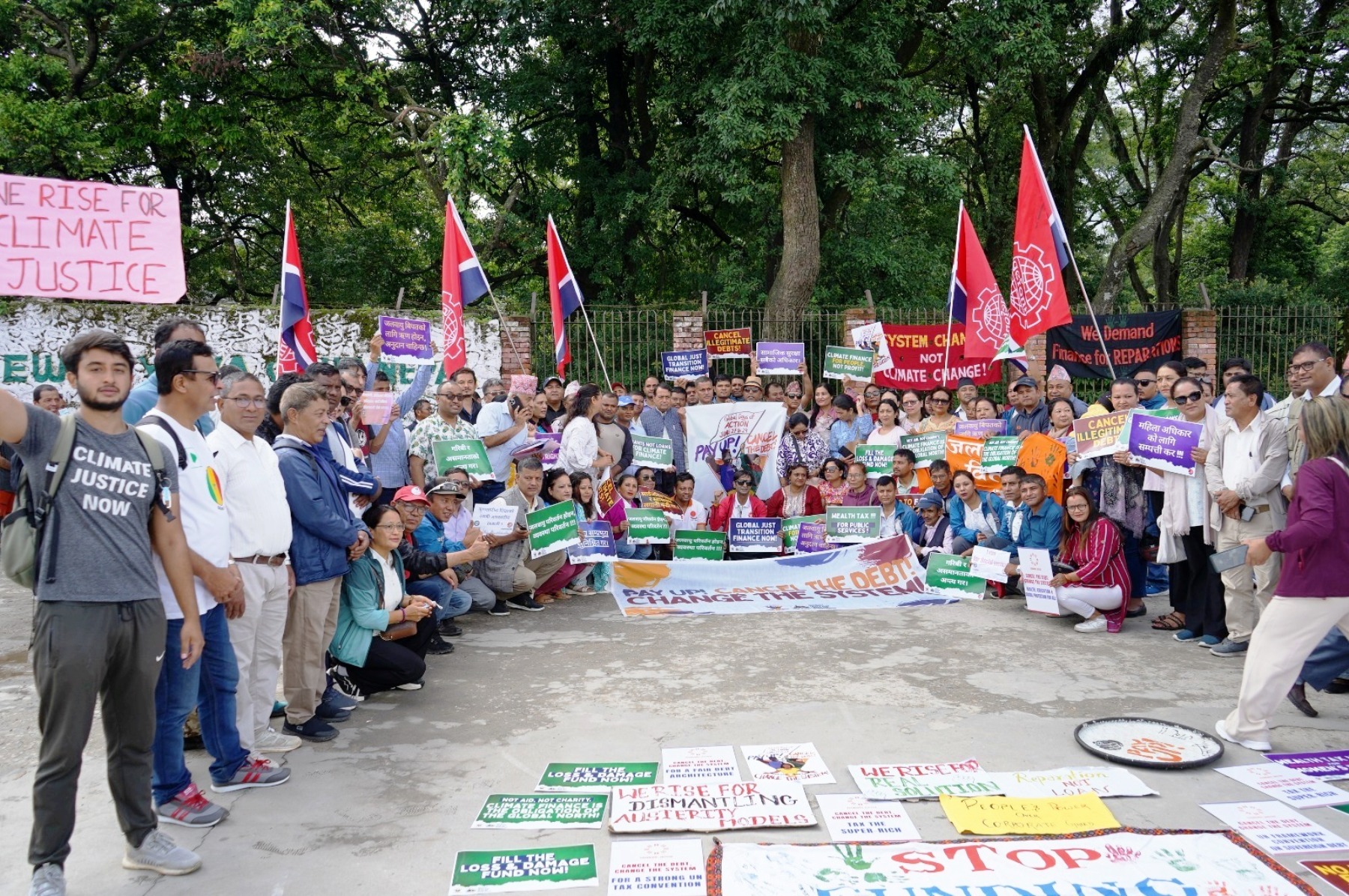

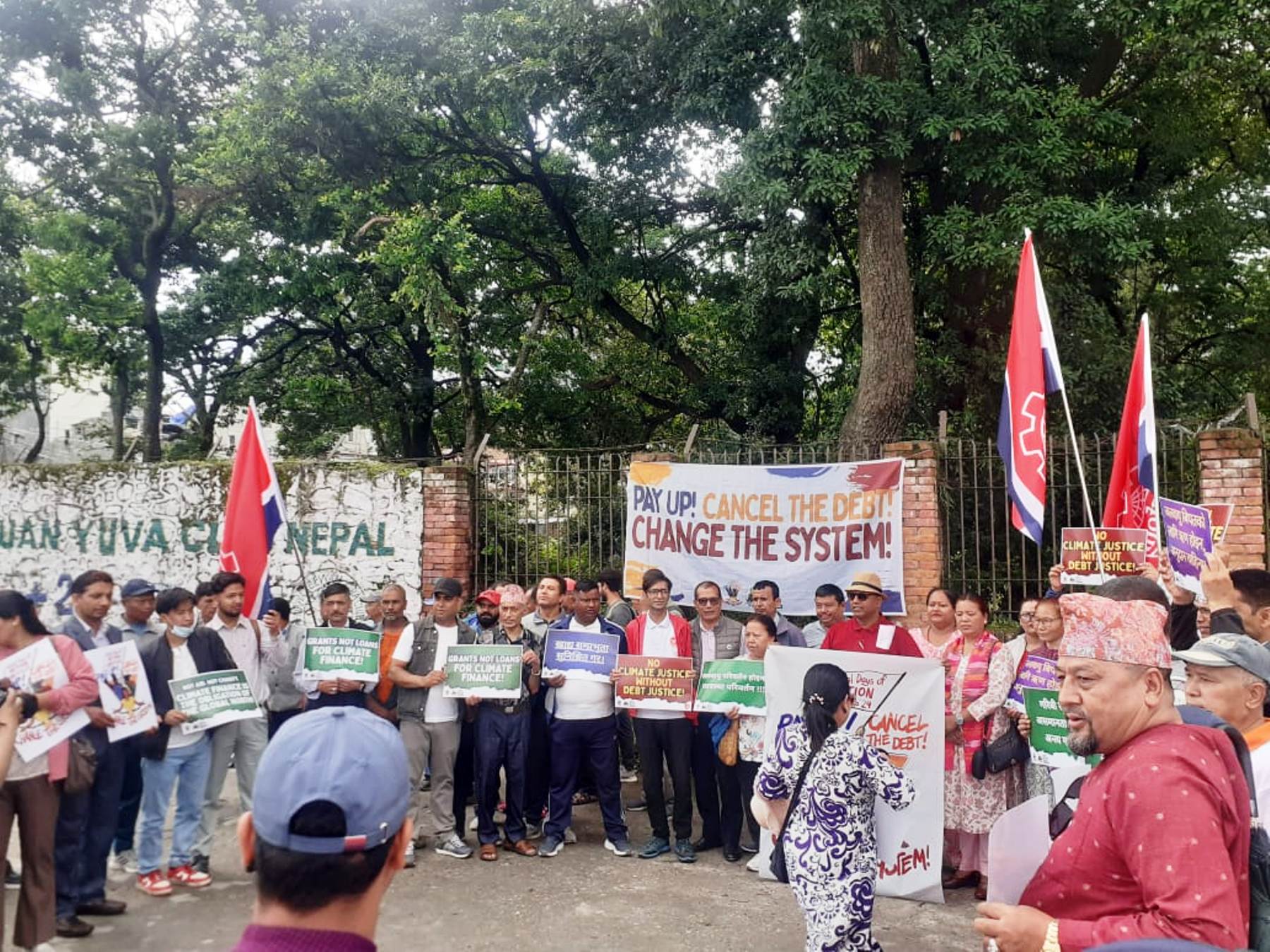
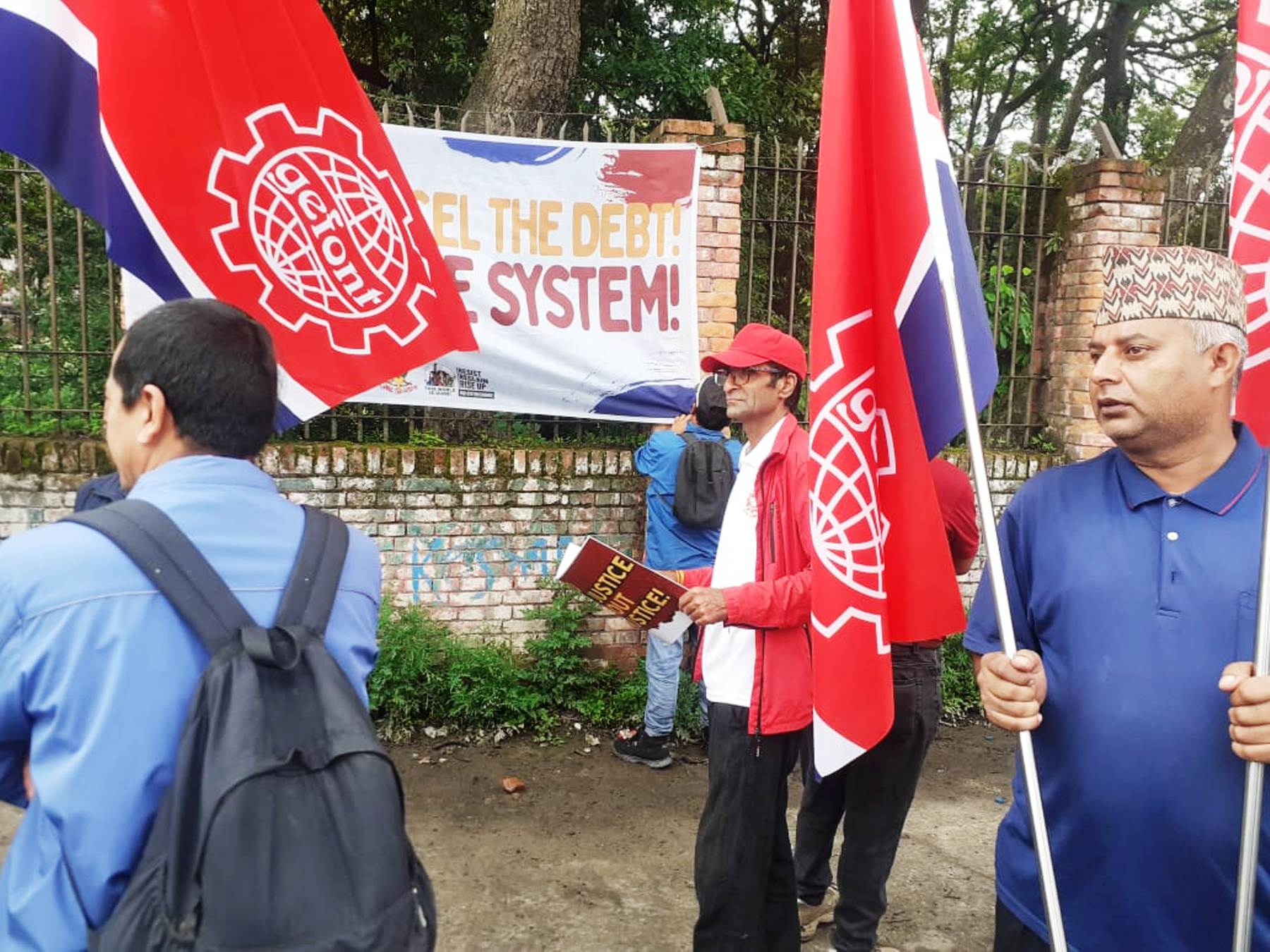
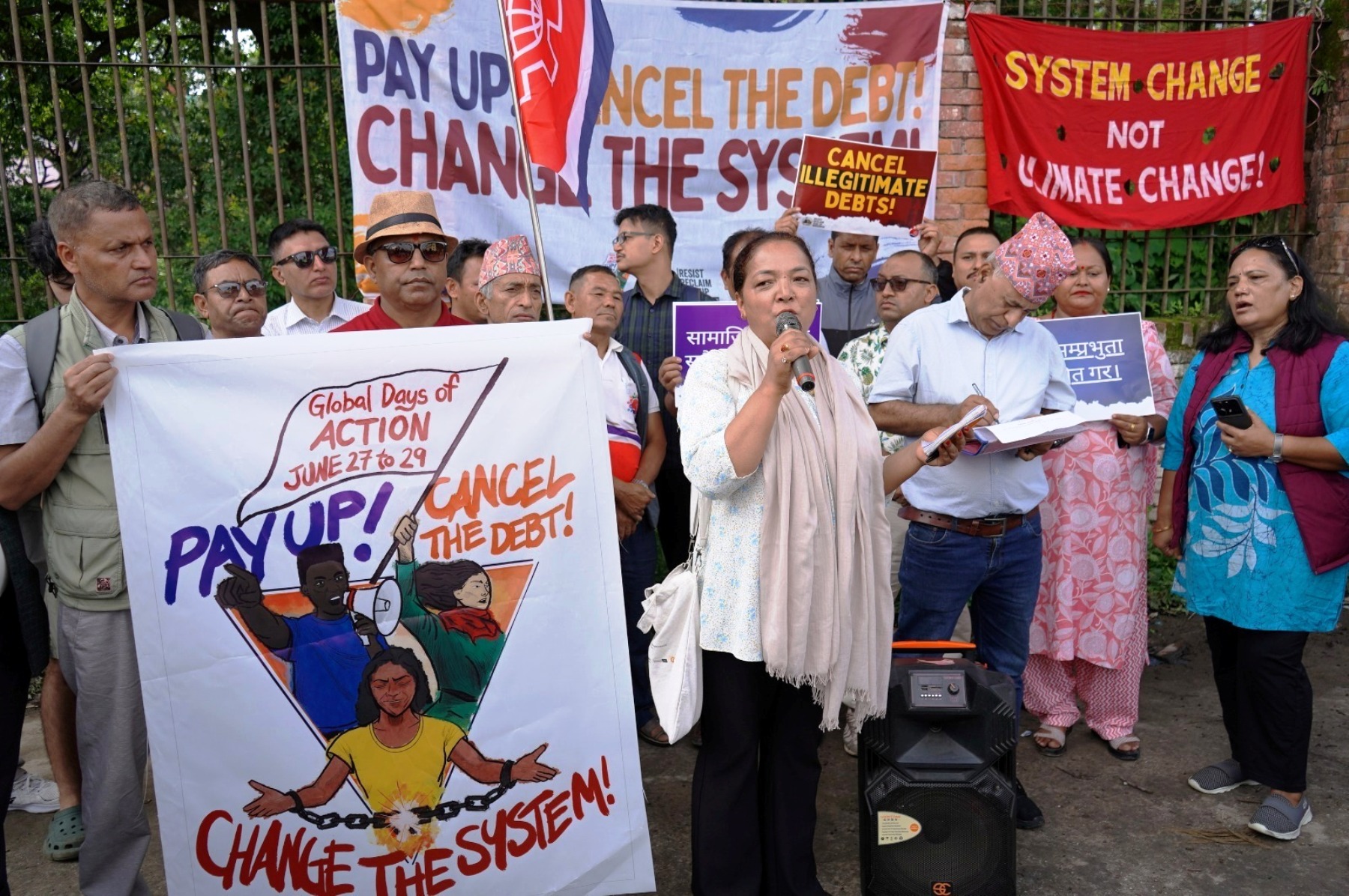
KATHMANDU, NEPAL . People’s movements, trade unions, women’s groups, and civil society organizations in Nepal gathered today in Kathmandu to demand urgent and just reforms to the global economic and financial system. The demonstration was part of a wave of coordinated global mobilizations across Asia, Africa, Europe, and the Americas, leading up to the 4th International Conference on Financing for Development (FfD4), to be held in Sevilla, Spain, from June 30 to July 3.
The protests across continents—including today’s action in Kathmandu—call for the cancellation of illegitimate and unsustainable debts, the fair taxation of elites and profiteers, and the immediate provision of adequate climate finance for developing countries, including Nepal. Participants stressed that the UN conference must deliver transformative outcomes, including the establishment of a UN Debt Convention that will shift the power to resolve sovereign debt crises away from creditor-dominated institutions and toward democratic, multilateral frameworks.
Nepal, like many countries in the Global South, is caught in a vicious cycle of debt and underdevelopment. Its external debt has grown substantially in recent years, even as public services struggle to meet the basic needs of citizens. At the same time, climate disasters—from floods and landslides to prolonged droughts—have intensified, damaging infrastructure and livelihoods and pushing vulnerable communities deeper into poverty.
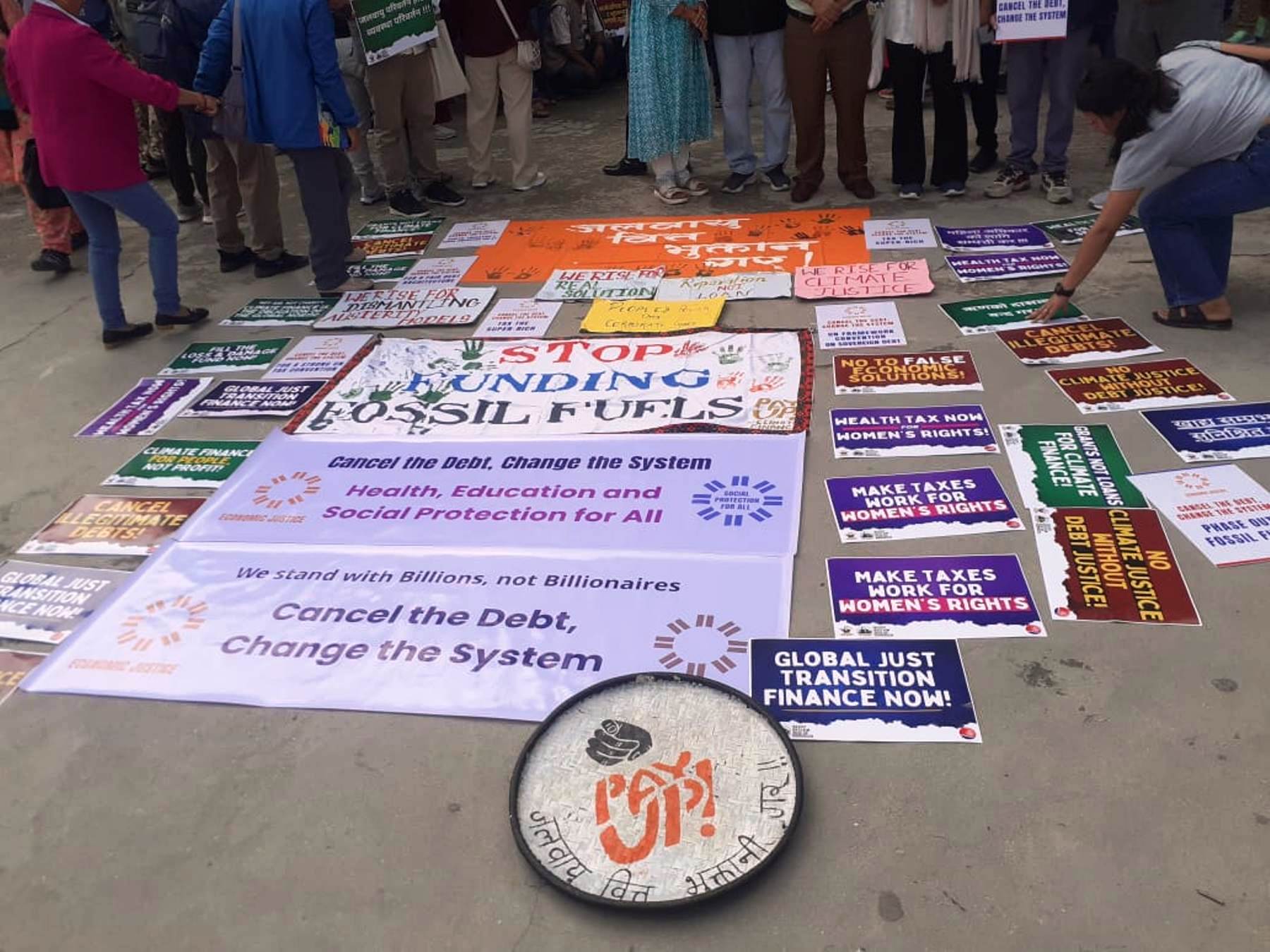

LidyNacpil, the coordinator of the Asian Peoples’ Movement on Debt and Development who is leading the international movement on climate justice, states, “What our world needs is a massive transfer of resources from North to South, as part of the reparations we are owed for historical injustice. For centuries, the people of the Global South have been exploited and our natural resources have been plundered–all to enrich the elites and governments of the Global North. Their enormous wealth was accumulated at the expense of our people and planet, and it is past time for them to pay up for the damage they’ve done.”
Participants in the Kathmandu action also highlighted how rising debt and austerity measures are hitting workers and marginalized groups the hardest. Laxman Sharma, Generaly Secretary of the General Federation of Nepalese Trade Unions (GEFONT), noted, “Workers in Nepal are paying the price of a failed global system—through job losses, rising living costs, and vanishing public services. The global financial architecture must be restructured so that it serves people, not profit. We need a system that protects workers, not one that drowns us in debt and inequality.”
Similarly, Dr. Suresh Tamang, from Rural Reconstruction Nepal (RRN), emphasized that “the time has come to transform global financial rules that have undermined national development agendas in countries like Nepal. Financing for development must be just, equitable, and grounded in people’s rights—not dictated by creditors or powerful nations. We call on world leaders to adopt a UN Debt Convention and to deliver climate finance as reparations, not loans.”
Gender justice was also a central theme. Sarmila Karki, Vice-President of the All Nepal Women’s Association (ANWA), reminded participants that “women in Nepal bear the heaviest brunt of climate disasters and economic injustice. As caregivers, farmers, and informal workers, we are often left out of decision-making and first to suffer when resources are scarce. We are demanding justice from those who have looted our futures and polluted our planet.”
Organizers warned that the current global financial architecture continues to extract wealth from the Global South. In 2022 alone, developing countries paid USD 49 billion more to external creditors than they received in new financing. Aid cuts recently announced by major donor countries threaten to widen the gap between financing needs and available resources, already projected to reach USD 6.4 trillion by 2030.
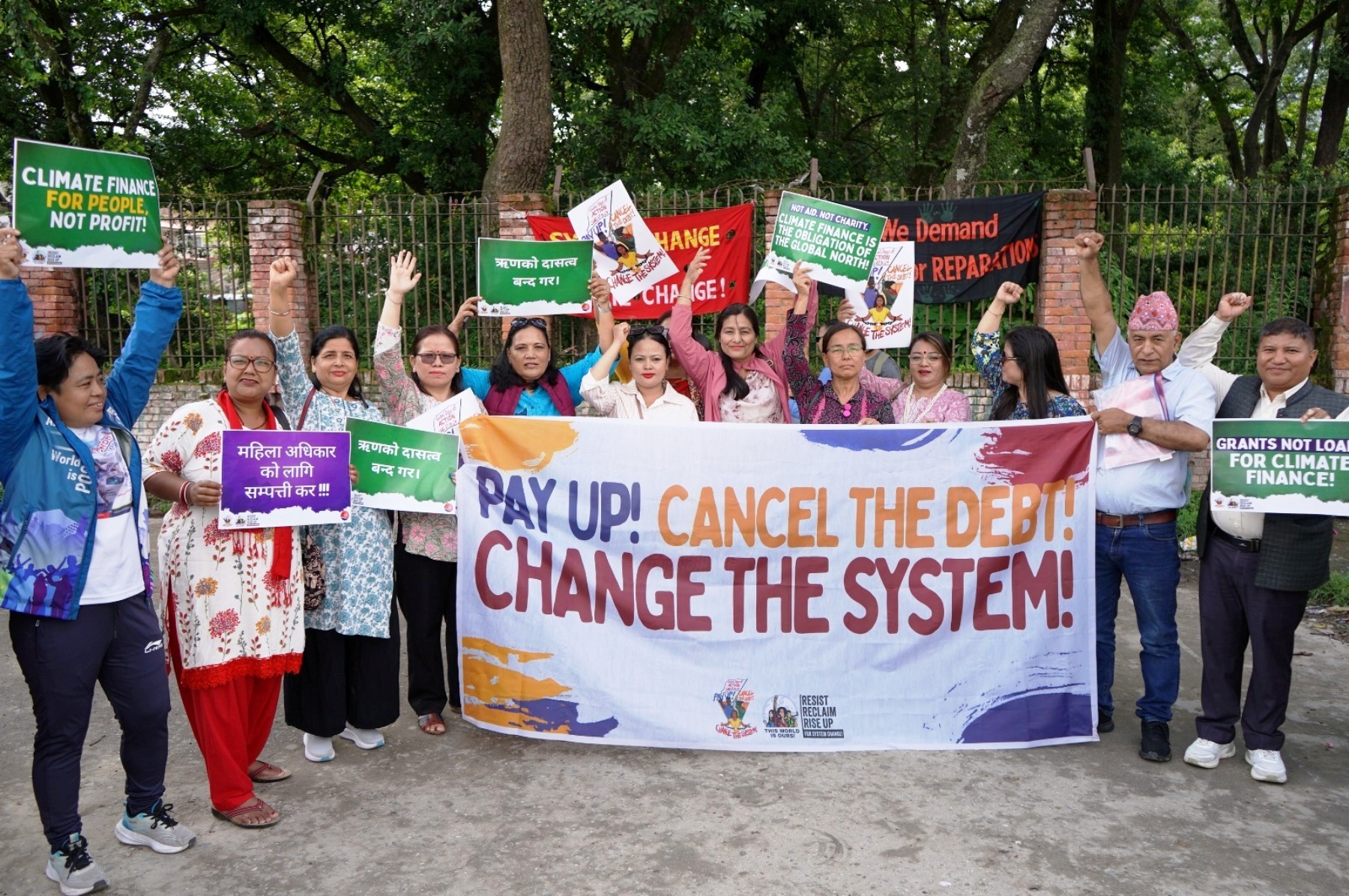
With FFD4 just days away, today’s demonstration in Nepal adds to the global momentum demanding that the United Nations step up to lead genuine reforms. From Kathmandu to Kampala to Manila, the call is clear: overhaul the global financial system, cancel illegitimate debts, and deliver public, grant-based climate finance now.