By Shiksha Sapkota and Rahul Aryal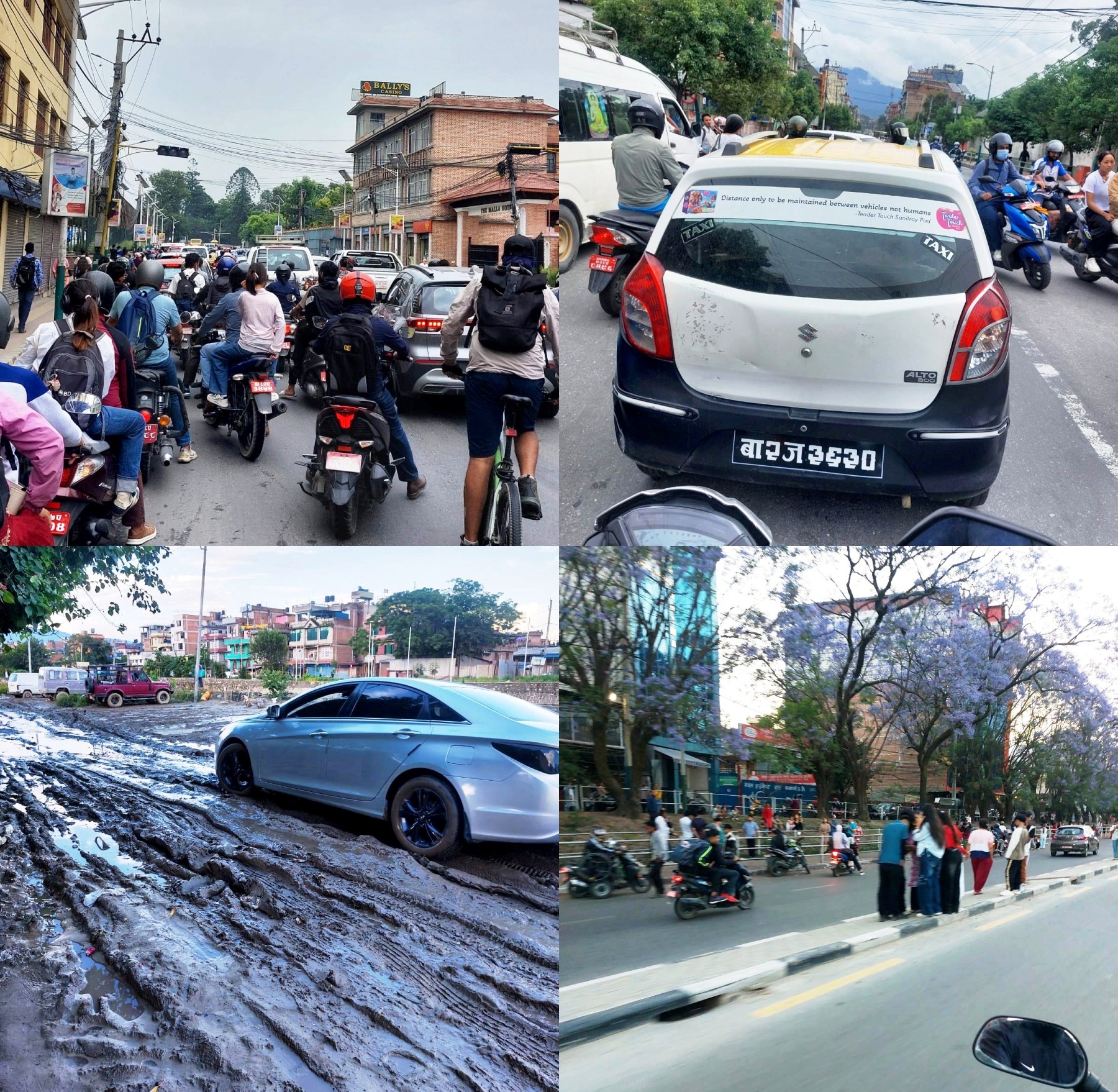

Kathmandu . the bustling epicenter of Nepal’s political, economic, and administrative landscape, is increasingly being choked by relentless traffic congestion. Once seen as a symbol of progress and connectivity, the roads of the Kathmandu Valley now portray a city under siegeoverrun by unchecked vehicle growth, decaying infrastructure, and a complete absence of strategic urban planning. The accompanying images speak volumes: vehicles jammed tightly together, pedestrians navigating roads without proper crossings, and luxury cars stranded in muddy, unfinished streets. This is no longer a routine urban issueit’s a full-blown crisis exposing the deep-rooted governance and planning failures in Nepal’s most prominent urban hub.
The Surge in Private Vehicles and Decline in Public Transit
According to the George Afful “One of the leading factors behind the mounting traffic woes in Kathmandu is the steep rise in private vehicle ownership”. According to recent data, around 79.1% of vehicles in the valley are motorcycles. Meanwhile, private cars, jeeps, and vans make up 12.42%, leaving public transport with a mere 2.67% share of the total fleet. In the fiscal year 2021/22 alone, the valley recorded over 350,751 two-wheelers and 73,372 private four-wheelers, compared to just about 5,300 buses and minibuses combined. This huge gap shows how people rely too much on private vehicles, which worsens traffic jamsespecially during office hourswhen thousands of people hit the roads at once, but dependable public transport is still lacking.
According to the American Public Transportation Association (APTA) “Despite rapid urbanization, there has been a glaring lack of investment in public transportation infrastructure”. Sajha Yatayat, one of the few organized public bus operators in the city, manages only 71 diesel buses throughout the entire valley. As a result, people are compelled to rely on their own vehicles or turn to poorly regulated microbuses and temposfurther intensifying road congestion. The absence of a reliable, punctual, and affordable public transit system is directly fueling the city’s traffic burden.
Rush Hour Chaos and Midday Mayhem
From 8:00 to 10:00 AM and again between 5:00 and 7:00 PM, Kathmandu’s roads come to a near standstill. The first 2 image captures this peak-hour nightmare vividlymotorcycles, taxis, and cars jammed together with nowhere to move. This scene repeats daily at major intersections like Kalanki, Tripureshwor, Lazimpat, Koteshwor, Tinkune, Ratna Park, and Maharajgunj. Even outside peak hours, traffic remains sluggish. The third image is particularly revealing thatit shows a high-end car bogged down in a muddy, unpaved city road. This reflects the dire state of Kathmandu’s Road maintenance. Especially during the monsoon, roads become muddy, slippery, and filled with potholes, turning commuting into a risky ordeal. Even in dry seasons, dust clouds blanket the air, and broken pavements create hazards for both vehicles and pedestrians.
The fourth image shows pedestrians dangerously marooned on road dividers, with no zebra crossings or pedestrian signals in sighthighlighting the city’s disregard for pedestrian safety and walkable infrastructure.
Nonfunctional Traffic Lights and Systemic Mismanagement
Around the 64 traffic signal systems installed across the Kathmandu Valley, only 35 are currently working and others are not working well. That means nearly half the traffic lights are out of ordera concerning reality for any capital city. Even among the operational signals, many blink irregularly or remain frozen, leading to confusion, collisions, and disorder at key junctions. LMC have introduced pedestrian push buttons36 in Kathmandu and 8 in Lalitpuras part of smart traffic management efforts where Lalitpur has installed five AI-based traffic lights, while both KMC.However, these scattered initiatives pale in comparison to the scale of the problem.
Moreover, there’s a significant information gap. Many citizens have no idea whether a particular road is one-way, where to expect a zebra crossing, or if any diversions are in place. This is due to the near absence of clear signage, direction boards, or digital alerts. The situation reflects a chronic failure of the authorities to provide essential traffic information and manage the city’s roads systematically.
Disorder, Indiscipline, and Corruption on the Streets
A pervasive lack of discipline among drivers, riders, and pedestrians further worsens the traffic mess. Lane discipline is rare; drivers frequently change lanes without indicators, overtake in tight spots, and even ride on sidewalks. Pedestrian walkways are regularly blocked by parked vehicles or encroaching traffic. In the provided images, people are seen navigating perilously through high-speed motorcycles on roads meant for walking.
Traffic enforcement, meanwhile, is often ineffective or inconsistent. Officers are either absent or preoccupied with collecting finesoften without clear accountability. Allegations of bribery and selective enforcement are common, discouraging lawful behavior and reinforcing a culture of impunity. Even pedestrians break the rulescrossing roads randomlylargely due to poor infrastructure, including the lack of footbridges, underpasses, or functioning pedestrian lights. All these factors converge to create unsafe and chaotic conditions throughout the city.
Governance Failure and Poor Urban Planning
Kathmandu, as the capital, should be a blueprint for sustainable urban growth in Nepal. But in reality, it represents a glaring failure of planning and governance. Numerous promisesranging from smart traffic systems and metro rail to electric public vehiclesremain stuck in the proposal phase. On the ground, traffic police still work with outdated tools, road projects are frequently abandoned halfway, and most public notices regarding traffic management never reach the citizens who need them.
The government seems preoccupied with flashy infrastructure announcements while neglecting everyday urban problems: poor roads, insufficient parking, inadequate signage, and an uninformed public. People routinely struggle to access accurate information about traffic laws, road conditions, or safe routes, which undermines any progress being made on broader infrastructure initiatives.
Though some positive stepslike AI signals in Lalitpur or awareness boards in select zoneshave been introduced, they remain isolated efforts. Without an integrated, valley-wide transport master plan, these projects won’t be able to bring about meaningful change.
Conclusion: A Roadmap Toward a Livable Capital
Kathmandu’s traffic crisis is more than just daily inconvenienceit’s a glaring symptom of broken systems, failed leadership, and poor regulation. With over 90% of vehicles being privately owned and public transport accounting for under 3%, the imbalance is both alarming and unsustainable. When only 55% of traffic lights function and roads are worse than in rural regions, the situation demands urgent intervention.
The way forward requires serious commitment: expanding public transportation fleets, implementing real-time traffic management, enforcing traffic rules impartially, maintaining roads regularly, and increasing public awareness around road safety. Only then can Kathmandu hope to transform from a congested urban sprawl into a capital that prioritizes the well-being and mobility of all its residentsnot just those behind the wheel.