अर्थ प्रणाली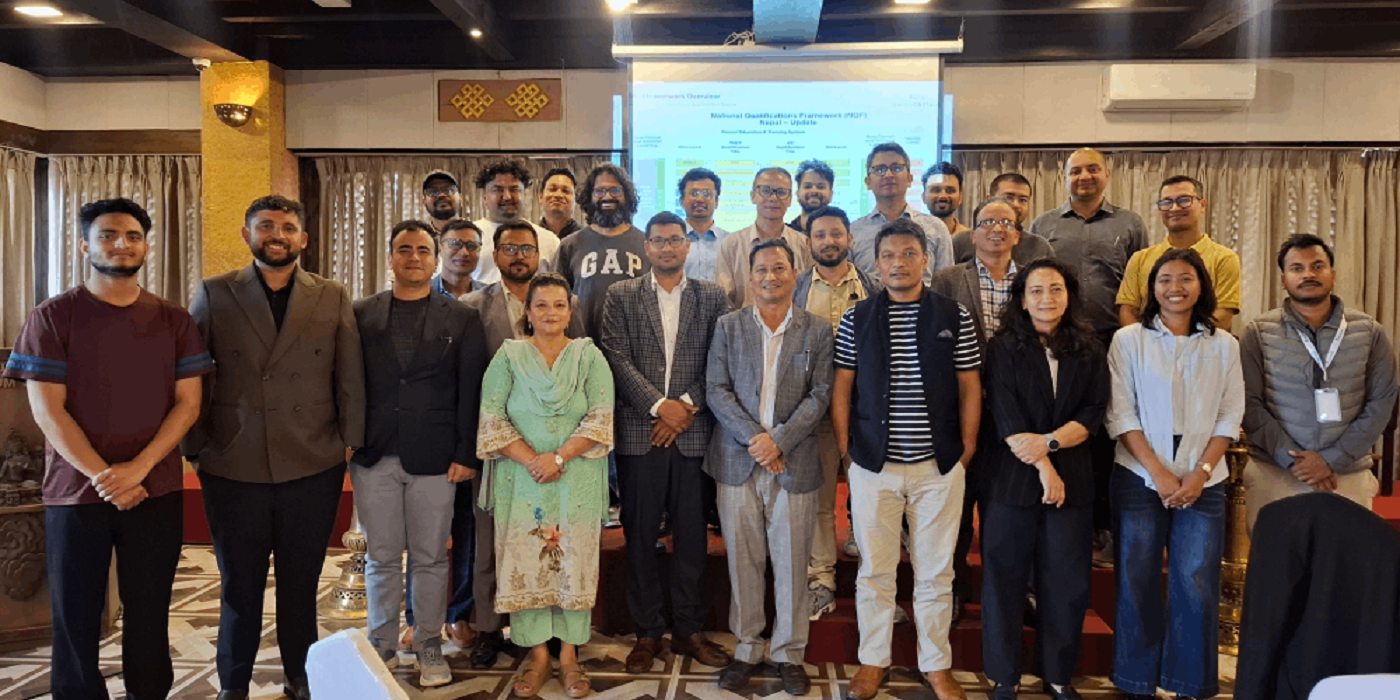

Kathmandu . Around 10,000 IT graduates enter Nepal’s workforce every year. However, many university graduates still lack the practical skills and industry-ready competencies required by employers.
This disconnect between academia and industry has widened the “skills gap” in Nepal’s IT sector. Despite earning degrees, many young graduates are often required to undergo additional training before becoming employable in the industry.
To address this challenge, Nepal Association for Software and IT Services Companies (NAS-IT), the apex body representing Nepal’s IT and software companies, has begun designing a new bachelor-level IT curriculum aimed at producing industry-ready professionals aligned with market demands.
The initiative is being implemented with financial and technical support from Swiss Agency for Development and Cooperation (SDC) and Swisscontact. According to NAS-IT President Gaurav Pandey, this could become Nepal’s first higher education curriculum developed under direct industry leadership.
“Graduates often do not possess the skills the industry is looking for,” Pandey said. “That is why we are now building a curriculum based on market needs. This is possibly the first time the industry itself is taking the lead in designing an academic course.”
Focus on AI and Future-Ready Skills
As Artificial Intelligence (AI) rapidly transforms the global IT industry, NAS-IT says the new program will go beyond traditional coding education. The curriculum will focus on problem-solving abilities, data literacy, critical thinking, and the capacity to work effectively with AI technologies to prepare students for the future job market.
Swisscontact believes the course will help bridge the gap between academia and industry while contributing to the development of a skilled workforce.
With AI driving rapid technological change, industries increasingly require professionals who can adapt quickly and think innovatively. NAS-IT says this need is one of the key reasons behind its leadership in the initiative.
Industry and Academia Collaboration
The curriculum development process has already begun. The program is being designed in accordance with Nepal’s National Qualification Framework (NQF), with active involvement from IT experts, educators, and other stakeholders. According to NAS-IT, the course is being developed as a future-oriented program targeting emerging technologies and evolving labor market demands.
For the joint development and operation of the program, NAS-IT has partnered with Nepal Open University. The four-year IT degree, expected to launch in the near future, will feature a strong work-integrated learning model as one of its core components.
According to Dr. Bhoj Raj Ghimire, the curriculum will include emerging technologies such as Artificial Intelligence (AI), Data Science, Blockchain, Cloud Computing, and Cybersecurity.
Students to Work From Day One
One of the program’s major highlights is that students will have opportunities to work directly in the IT industry from the very beginning of their studies. By the time they graduate, students are expected to possess not only academic qualifications but also practical skills and real-world industry experience.
NAS-IT believes the initiative will help reduce the gap between universities and industry while supporting the development of globally competitive IT professionals within Nepal itself.