अर्थ प्रणाली

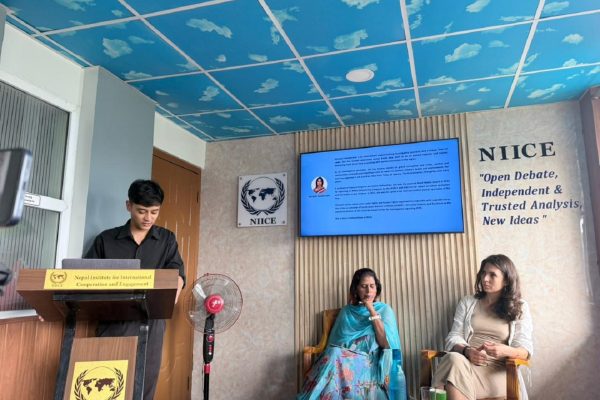
Kathmandu . The Nepal Institute for International Cooperation and Engagement hosted a conversation on “Nepali Workers to Romania: Between Opportunity and Exploitation” on 22 May 2026 in its seminar hall in Hattiban, Lalitpur. The event explored the changing patterns of Nepali labour migration to Romania, and discussed the implications of this transition for migrant workers, migration governance, and labour policies.
Dilrukshi Hanhunnetti initiated the discussion emphasizing that migration to the Gulf countries has traditionally involved temporary labour migration with eventual return,migration to Romania as a relatively new and evolving issue that requires deeper research and greater policy engagement. In the later part of the conversation she highlighted the comparison between the Gulf migration and the migration to European nations.
Speaking at the event, Iulia Hau discussed the growing trend of migrant workers entering Romania and highlighted the challenges faced by Nepali migrants in the country. She noted that migrant workers often encounter economic fraud, deceptive recruitment practices, systematic labour exploitation, abandonment by authorities, and weak procedures for handling abuse reports. She further observed that a significant number of workers migrate through unregistered channels, making them more vulnerable to exploitation and legal insecurity.
She highlighted the imbalance of power between employers and migrant workers, explaining that many workers lack access to proper legal protection and institutional support. Comparing migration trends in Romania with those in countries such as Italy, discussions noted that many migrants currently see Romania as a stepping stone to Western European countries. However, she added that if labour migration were better regulated and workers were provided with safer conditions and stronger protections, many migrants might choose to remain in Romania for longer periods. She further remarked that proper and satisfactory migration has increasingly become a matter of luck for many workers navigating uncertain and poorly regulated systems.
The discussion concluded with reflections on the need for stronger migration governance, improved regulation of recruitment systems, and better institutional mechanisms to ensure the safety and protection of Nepali migrant workers as labour migration patterns continue to shift toward Europe.